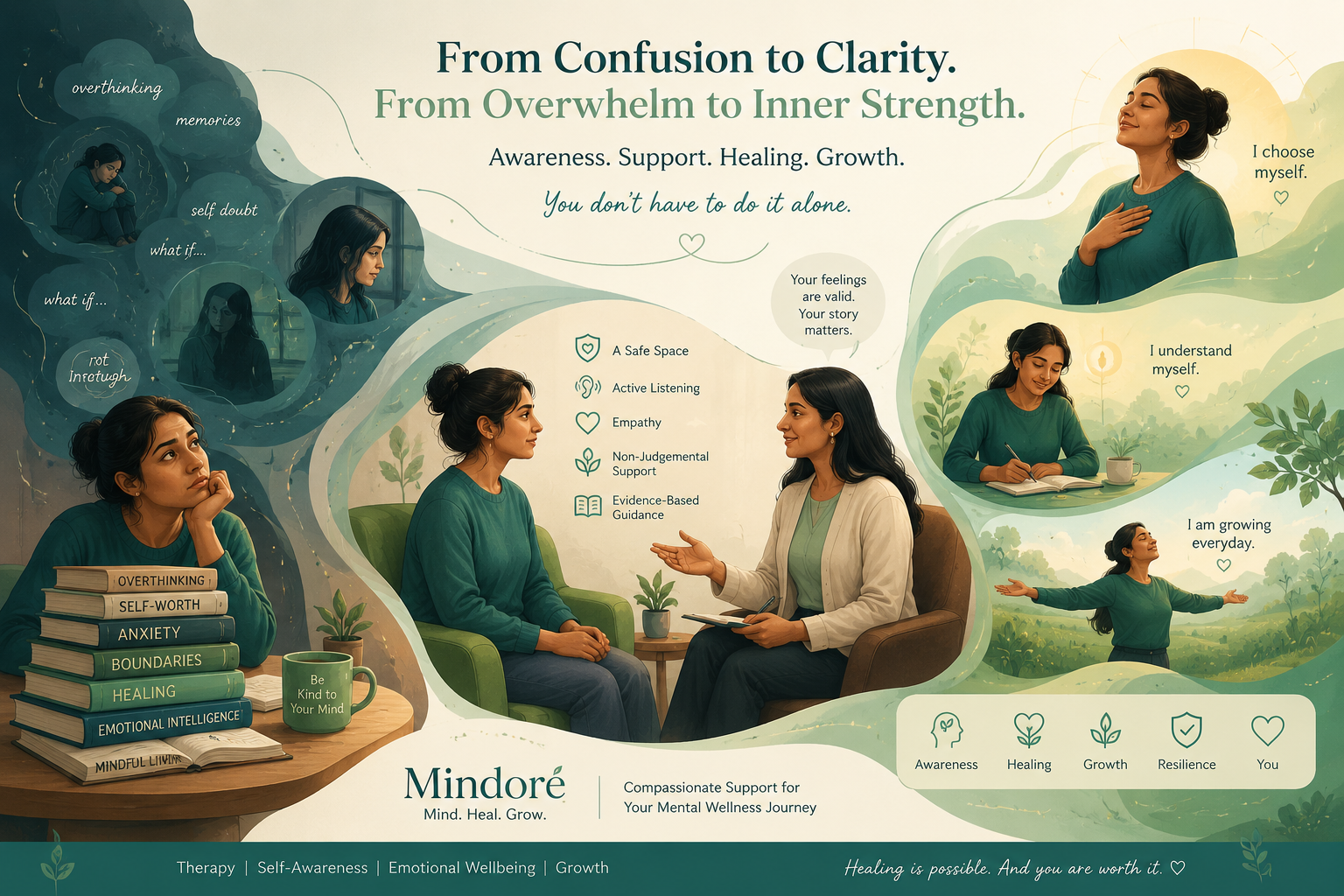

Self-help books have helped millions of people understand emotions, build healthier habits, and develop self-awareness. They can offer valuable insights, practical exercises, and hope during difficult times.
However, many people who have experienced deep emotional trauma discover something confusing:
"I understand why I feel this way, but I still cannot change how I react."
They read books about healing, listen to podcasts, practice positive thinking, journal regularly, and learn about their childhood experiences — yet they continue to experience anxiety, emotional triggers, relationship struggles, or feelings of being stuck.
This does not mean self-help is useless.
It means that understanding trauma and healing trauma are two different processes. Deep trauma is not only stored as a memory or a thought. It can influence emotional responses, beliefs about oneself, relationships, and the way the nervous system reacts to perceived danger.
This is where therapy can provide something self-help books cannot always offer: a safe, personalised, human relationship for healing.