
Postpartum Blues vs Postpartum Depression: Understanding the Difference in the Indian Cultural Context
Back to articles
Maternal Health11 min read

Postpartum Blues vs Postpartum Depression: Understanding the Difference in the Indian Cultural Context

Learn the difference between postpartum blues and postpartum depression, their symptoms, causes, treatment, and how Indian family dynamics influence maternal mental health.

Neha Beniwal

Neha Beniwal

Counselling Psychologist

Introduction

Bringing a baby into the world is often described as one of life's happiest moments. Families celebrate, relatives visit, and everyone focuses on the newborn. Yet for many mothers, this period also brings unexpected emotional changes.
Some women cry without knowing why. Others feel overwhelmed, anxious, or emotionally exhausted. While these experiences are often dismissed with comments like:

  • "Every mother goes through this."

  • "You'll be fine in a few days."

  • "Don't think negatively."

  • "You should be happy—you have a healthy baby."

Although these statements may be well-intentioned, they can prevent mothers from talking openly about what they are experiencing.

In India, motherhood is often associated with sacrifice, resilience, and unconditional happiness. As a result, many women feel guilty if they struggle emotionally after childbirth. Understanding the difference between postpartum blues and postpartum depression is an important step toward reducing stigma and ensuring mothers receive the care they deserve.

Why Maternal Mental Health Matters

A mother's mental health influences not only her own well-being but also the emotional and physical health of her baby and family.
Research shows that untreated maternal depression may affect:

  • Mother–infant bonding

  • Breastfeeding experiences

  • Infant emotional development

  • Child development

  • Partner relationships

  • Family functioning

Supporting maternal mental health benefits the entire family.

What Are Postpartum Blues?

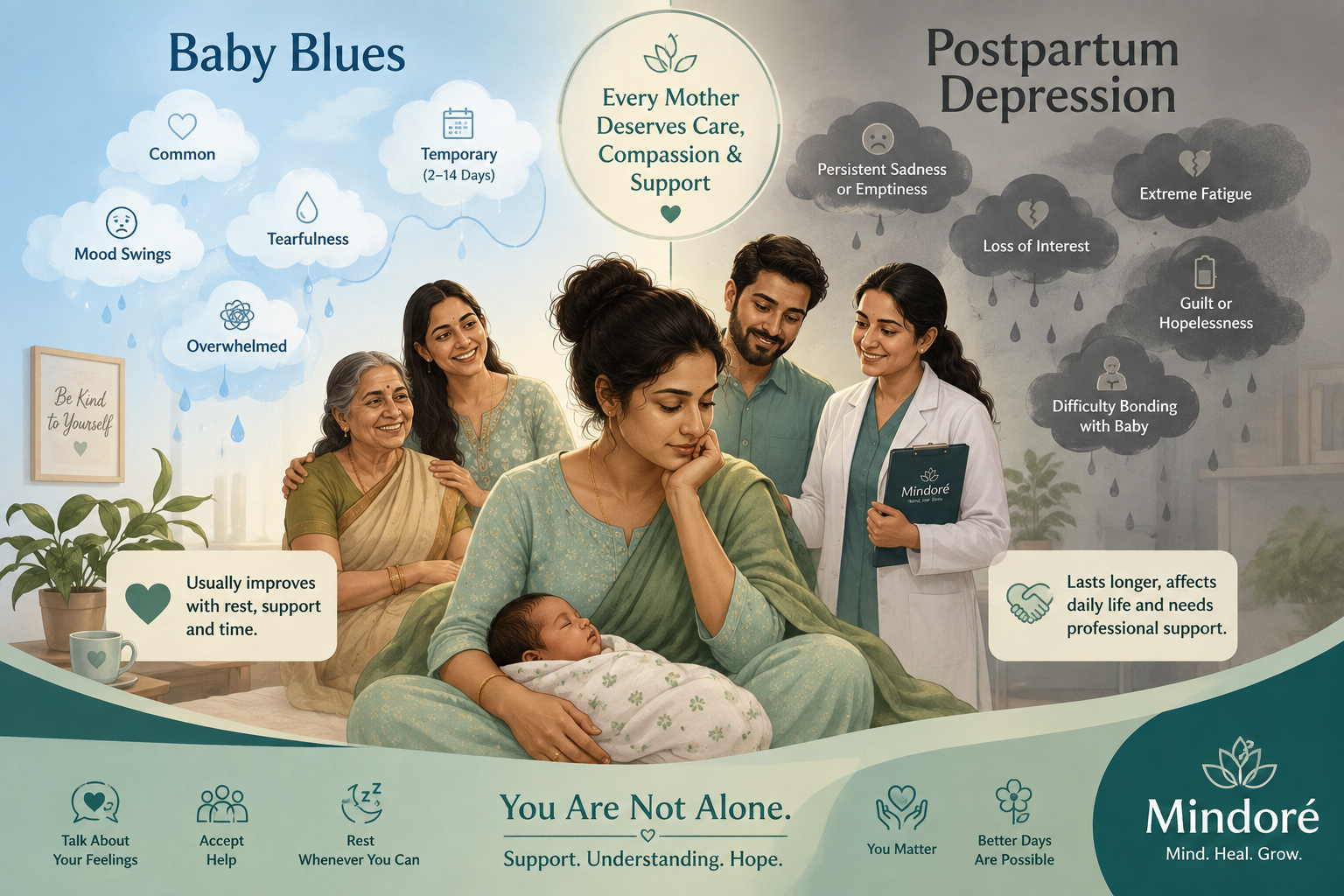
Postpartum blues, often called "baby blues," are a temporary emotional adjustment that many mothers experience after childbirth. They usually begin 2–3 days after delivery and often improve within two weeks without medical treatment.
Baby blues are considered a normal response to:

  • Sudden hormonal changes

  • Physical recovery from childbirth

  • Sleep deprivation

  • New responsibilities

  • Emotional adjustment to becoming a parent

Baby blues do not mean that a mother is weak, ungrateful, or incapable.

Common Symptoms of Postpartum Blues

A mother may experience:

  • Crying easily

  • Mood swings

  • Feeling emotionally sensitive

  • Irritability

  • Feeling overwhelmed

  • Fatigue

  • Mild anxiety

  • Difficulty concentrating

  • Trouble sleeping even when the baby sleeps

Despite these challenges, mothers with postpartum blues generally continue to enjoy moments with their baby and notice gradual improvement over several days.

What Is Postpartum Depression?

Postpartum depression (PPD) is a mental health condition that can develop after childbirth. Unlike baby blues, its symptoms are more intense, last longer, and interfere with daily life. Without support or treatment, postpartum depression can significantly affect a mother's emotional well-being and her ability to care for herself and her baby.

Importantly, postpartum depression is not caused by a lack of love for the baby. It is a complex condition influenced by biological, psychological, and social factors.

Symptoms of Postpartum Depression

Symptoms may include:

  • Persistent sadness

  • Frequent crying

  • Feeling hopeless

  • Loss of interest in activities once enjoyed

  • Feeling disconnected from the baby

  • Extreme fatigue

  • Changes in appetite

  • Difficulty sleeping or sleeping excessively

  • Excessive guilt

  • Feelings of worthlessness

  • Irritability

  • Difficulty making decisions

  • Constant worry

  • Feeling like a "bad mother"

Some mothers may also experience frightening thoughts about accidental harm coming to the baby. These thoughts can be deeply distressing and are not uncommon. However, if a mother experiences thoughts of intentionally harming herself or her baby, she should seek urgent professional help immediately.

Postpartum Blues vs. Postpartum Depression

Feature

Postpartum Blues

Postpartum Depression

Onset

2–3 days after childbirth

Within weeks or months after delivery

Duration

Usually resolves within 2 weeks

Persists beyond 2 weeks and may continue for months if untreated

Severity

Mild

Moderate to severe

Daily functioning

Mostly preserved

Significantly affected

Medical treatment

Usually not required

Often benefits from professional treatment

Impact on bonding

Usually temporary

May interfere with bonding and caregiving

Understanding the Indian Cultural Context

The postpartum period in India is shaped by diverse traditions, family structures, and cultural beliefs. Many practices—such as encouraging rest, providing nutritious food, and helping with newborn care—can be valuable sources of support. However, certain expectations may also make it harder for mothers experiencing emotional difficulties to seek help.

"A Good Mother Should Be Happy"

Many women grow up believing that motherhood should be joyful from the very beginning. When they instead feel overwhelmed, anxious, or persistently sad, they may fear being judged as inadequate or ungrateful.

Joint Family Dynamics

Living in a joint family can provide practical help with childcare and household responsibilities. At the same time, differences in parenting advice, limited privacy, or pressure to meet family expectations may increase stress for some mothers. Experiences vary widely across families.

Preference for Sons in Some Communities

Although attitudes are changing, societal or family preference for a male child still exists in some settings. Mothers who give birth to daughters may face criticism or blame, adding emotional strain during an already vulnerable period.

Pressure to Resume Responsibilities Quickly

Many mothers are expected to:

  • Cook

  • Entertain visitors

  • Care for the baby continuously

  • Manage household responsibilities

This pressure, combined with physical recovery and sleep deprivation, can contribute to emotional exhaustion.

Stigma Around Mental Health

Emotional distress after childbirth may sometimes be dismissed as:

  • "Normal mood swings"

  • "Weakness"

  • "Lack of faith"

  • "Overthinking"

Such beliefs can delay recognition of postpartum depression and prevent mothers from seeking timely professional care.

Why Does Postpartum Depression Happen?

There is no single cause of postpartum depression (PPD). Instead, it usually develops through a combination of biological, psychological, and social factors. Experiencing PPD does not mean a mother has done something wrong or is a "bad mother."

1. Biological Factors

After childbirth, hormone levels—particularly estrogen and progesterone—drop rapidly. These hormonal shifts can influence brain chemistry and mood regulation. Other physical changes may also contribute, such as:

  • Sleep deprivation

  • Physical recovery after childbirth

  • Pain following vaginal birth or cesarean section

  • Thyroid hormone changes in some women

  • Nutritional deficiencies (such as iron deficiency after significant blood loss)

These biological changes alone do not cause PPD but may increase vulnerability.


2. Psychological Factors

Emotional and psychological experiences before and after childbirth also play a role. Risk may be higher in mothers who:

  • Have a history of depression or anxiety

  • Experienced depression during pregnancy

  • Tend to be highly self-critical or perfectionistic

  • Have experienced trauma or abuse

  • Feel unprepared for parenthood

  • Experience significant stress during pregnancy


3. Social and Environmental Factors

Life circumstances can strongly influence maternal mental health.
Examples include:

  • Limited emotional support

  • Financial difficulties

  • Relationship conflict

  • Domestic violence

  • Caring for a premature or medically unwell baby

  • Lack of sleep due to infant care

  • Isolation from friends or family

  • Pressure to meet unrealistic expectations of motherhood

Risk Factors

A mother is more likely (though not certain) to develop postpartum depression if she has one or more of the following:

  • Previous depression or anxiety

  • Family history of mood disorders

  • Unplanned pregnancy

  • Pregnancy or birth complications

  • Multiple births (twins, triplets)

  • Poor social support

  • Significant life stressors

  • Financial hardship

  • Relationship difficulties

  • Baby admitted to the NICU

  • History of infertility or pregnancy loss

Having these risk factors does not guarantee postpartum depression, but they may increase the need for monitoring and support.

When Should a Mother Seek Professional Help?

Professional support is recommended if:

  • Symptoms last longer than two weeks

  • Sadness becomes intense or persistent

  • Daily activities become difficult

  • Bonding with the baby feels very difficult

  • Anxiety becomes overwhelming

  • There are panic attacks

  • Feelings of hopelessness continue

  • Thoughts of self-harm or harming the baby occur

Early support often leads to better recovery.

How Is Postpartum Depression Diagnosed?

There is no single blood test or brain scan that diagnoses postpartum depression.

A qualified healthcare professional—such as a psychiatrist, clinical psychologist, counselling psychologist (where appropriate within local practice), or another trained healthcare provider—will typically:

  • Discuss symptoms

  • Ask about mood changes

  • Review medical history

  • Explore pregnancy and birth experiences

  • Assess sleep, appetite, and daily functioning

  • Evaluate safety concerns if necessary

Validated screening questionnaires, such as the Edinburgh Postnatal Depression Scale (EPDS), may be used as part of the assessment. Screening tools support clinical evaluation but do not confirm a diagnosis on their own.

Treatment Options

Treatment depends on symptom severity, individual preferences, and clinical needs.

1. Psychological Therapy

For many women, talking therapies are an important part of treatment.
Evidence-based approaches may include:

  • Cognitive Behavioural Therapy (CBT)

  • Interpersonal Therapy (IPT)

  • Supportive counselling

  • Family or couples therapy when appropriate

Therapy can help mothers:

  • Understand their emotions

  • Develop coping strategies

  • Reduce guilt and self-blame

  • Improve communication with family

  • Strengthen confidence in parenting


2. Medication

Some women may benefit from antidepressant medication prescribed by a psychiatrist or another qualified medical doctor.
The decision to use medication depends on:

  • Symptom severity

  • Breastfeeding considerations

  • Medical history

  • Personal preferences

  • Risks and benefits discussed with the treating clinician

Medication should never be started, stopped, or changed without medical guidance.


3. Lifestyle and Supportive Care

Alongside professional treatment, supportive lifestyle measures can aid recovery.
These may include:

  • Prioritizing rest whenever possible

  • Accepting help from trusted family members

  • Eating regular, balanced meals

  • Gentle physical activity after medical clearance

  • Spending time outdoors

  • Staying connected with supportive people

  • Limiting unrealistic expectations

Lifestyle changes alone may not be sufficient for moderate or severe postpartum depression, but they can complement treatment.

Self-Care Tips for New Mothers

Self-care is not selfish—it supports both the mother and the baby.
Consider:

Rest When Possible

Even short naps can help reduce exhaustion.

Eat Regular Meals

Skipping meals may worsen fatigue and mood.

Stay Hydrated

Adequate fluids support physical recovery, especially during breastfeeding.

Talk About Your Feelings

Share your emotions with someone you trust instead of keeping everything inside.

Lower Unrealistic Expectations

Your home does not have to be perfect. Recovery and caring for your baby are priorities.

Celebrate Small Wins

Simple achievements—such as taking a shower, eating breakfast, or soothing your baby—are meaningful during the postpartum period.

How Families Can Help

Recovery is often easier when mothers feel supported rather than judged.
Partners, relatives, and friends can:

  • Listen without interrupting

  • Validate her feelings instead of dismissing them

  • Help with household tasks

  • Share baby-care responsibilities

  • Encourage rest

  • Attend healthcare appointments if invited

  • Watch for worsening symptoms

  • Encourage professional help when needed

Small acts of kindness can have a significant impact.

What Not to Say

Avoid comments such as:

  • "Other mothers manage just fine."

  • "You're overreacting."

  • "You should be grateful."

  • "It's all in your head."

  • "Just think positively."

  • "Good mothers don't feel like this."

Such statements may increase guilt and discourage mothers from seeking help.

What to Say Instead

Supportive alternatives include:

  • "I'm here for you."

  • "You don't have to go through this alone."

  • "It's okay to ask for help."

  • "You're doing your best."

  • "How can I support you today?"

  • "Your feelings matter."

Myths vs Facts

Myth

Fact

Every new mother feels depressed.

Many experience baby blues, but postpartum depression is different and not experienced by everyone.

Postpartum depression means a mother doesn't love her baby.

Mothers with PPD often love their babies deeply but struggle because of a treatable mental health condition.

Strong women don't get postpartum depression.

PPD can affect women of any background, personality, or level of resilience.

It will always go away on its own.

Some mothers recover without formal treatment, but many benefit from professional support.

Asking for help is a sign of weakness.

Seeking help is a proactive and healthy step toward recovery.

A Case Example

Riya, a 30-year-old first-time mother, felt tearful and overwhelmed during the first week after giving birth. Her family reassured her, and her emotions gradually improved over the next several days. This was consistent with postpartum blues.

Several months later, Anita, another new mother, continued to feel persistently sad, hopeless, and disconnected from activities she once enjoyed. She struggled to sleep even when her baby slept and felt guilty that she was "failing" as a mother. After seeking professional help, she was diagnosed with postpartum depression and began therapy. With support from her family and treatment, she gradually recovered.

These examples illustrate how the duration, intensity, and impact of symptoms help distinguish postpartum blues from postpartum depression.

Can Postpartum Depression Be Prevented?

Not every case can be prevented, but the risk may be reduced by:

  • Screening for mental health concerns during pregnancy

  • Building a support network before delivery

  • Learning about postpartum emotional changes

  • Planning practical help for the weeks after childbirth

  • Prioritizing sleep and recovery

  • Attending postnatal health check-ups

  • Seeking help early if symptoms develop

Final Thoughts

The birth of a child brings profound physical, emotional, and social changes. While many mothers experience temporary emotional ups and downs, others may face postpartum depression—a real and treatable mental health condition.

In many Indian families, attention naturally centres on the newborn. However, caring for the mother is equally important. Emotional struggles after childbirth should never be dismissed as weakness, laziness, or a lack of gratitude. Instead, they deserve compassion, understanding, and timely support.

Recognizing the difference between postpartum blues and postpartum depression can help families respond with empathy rather than judgment. When mothers receive the care they need, they are better able to recover, bond with their babies, and thrive in their new role.

Remember: A healthy mother is not only important for herself—it is one of the greatest gifts a family can give a child.

Frequently Asked Questions

Need professional mental health support?

Book a counselling session with our psychologists.

Book Session
Neha Beniwal

Written by

Neha Beniwal

Counselling Psychologist