How to Deal With Comparison Culture on Instagram: 15 Healthy Ways to Stop Comparing Yourself
Back to articles
CBT Tools & Personal Growth14 min read

How to Deal With Comparison Culture on Instagram: 15 Healthy Ways to Stop Comparing Yourself

Do you constantly compare yourself with people on Instagram? Learn why comparison happens, how it affects mental health, and discover evidence-based strategies to build confidence and healthier social media habits.

Neha Beniwal

Neha Beniwal

Counselling Psychologist

Introduction

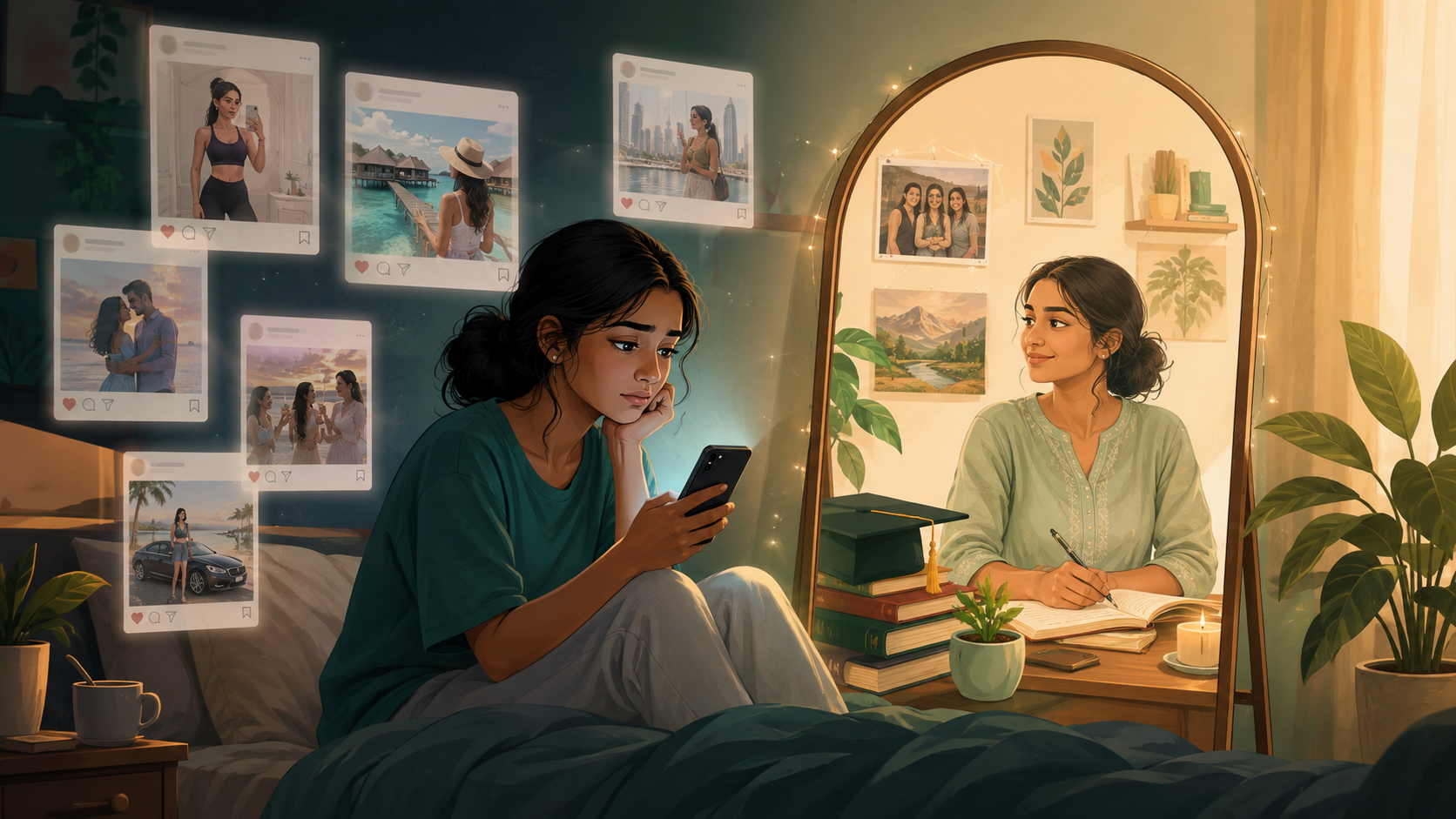
You open Instagram for "just five minutes." Within moments, you've seen a friend announce a promotion, someone your age buying their dream home, a fitness influencer with a seemingly perfect body, and a travel creator enjoying another luxury vacation.

Suddenly, your own life feels ordinary.

If this sounds familiar, you're not alone.

Instagram can inspire creativity, connection, and learning. But it can also become a place where constant comparison leaves people feeling "not good enough." Many people finish scrolling feeling less confident than they did before opening the app—even when nothing in their own lives has changed.

Comparison is a natural part of being human. However, social media has made it easier, faster, and more constant than ever before. Understanding why this happens is the first step toward protecting your mental well-being.

What Is Comparison Culture on Instagram?

Comparison culture is the habit of measuring your appearance, success, relationships, lifestyle, achievements, or happiness against what you see others sharing online.

On Instagram, this often involves comparing yourself with carefully selected photos, edited videos, milestone announcements, or highlight reels that show only a small part of someone's real life.

Unlike face-to-face interactions, social media rarely shows everyday struggles, disappointments, failures, or moments of uncertainty. As a result, comparisons are often unfair because they are based on incomplete information.

Why Is Instagram Designed to Encourage Comparison?

Instagram isn't intentionally trying to make people feel inadequate. Its primary goal is to keep users engaged.
The platform's algorithm often prioritizes content that attracts attention, including:

  • Attractive photos

  • Luxury lifestyles

  • Fitness transformations

  • Career achievements

  • Relationship milestones

  • Viral trends

  • Before-and-after transformations

Because these posts receive more engagement, users naturally see more of them. Over time, this can create the illusion that everyone else is happier, wealthier, more successful, or more attractive. This distorted view makes ordinary life seem less exciting, even though most people experience everyday challenges that never appear online.

The Psychology Behind Social Comparison

Psychologist Leon Festinger introduced Social Comparison Theory in 1954. The theory suggests that people naturally evaluate themselves by comparing their abilities, achievements, and experiences with others.

Comparison itself is not harmful. In many situations, it helps people learn, improve skills, and understand where they stand. Problems arise when comparison becomes constant, unrealistic, or tied to self-worth. Instagram provides an endless stream of people to compare yourself with, making it difficult for the brain to take breaks from these evaluations.

Upward vs. Downward Comparison

Not all comparison affects us in the same way.

Type

What It Means

Possible Effect

Upward Comparison

Comparing yourself with someone you perceive as doing better

Can inspire growth, but may also increase envy, self-doubt, or feelings of inadequacy

Downward Comparison

Comparing yourself with someone facing greater difficulties

May increase gratitude temporarily but can also create unhealthy judgment if overused

Healthy comparison motivates learning.

Unhealthy comparison makes your self-esteem depend on someone else's achievements.

Why Does Our Brain Believe What We See?

The human brain tends to process repeated information as normal. When your feed consistently shows perfect vacations, flawless skin, expensive lifestyles, and constant achievements, your brain may begin to believe that these experiences are common—even though they represent a carefully edited fraction of reality.
Several psychological processes contribute to this:

  • Confirmation bias: You notice posts that reinforce your existing insecurities.

  • Availability heuristic: Frequently seen content feels more common than it really is.

  • Halo effect: Attractive or successful people may be assumed to have perfect lives in every area.

  • Fear of Missing Out (FOMO): Seeing others' activities can create anxiety that you're falling behind.

Together, these biases can make comparison feel automatic.

How Instagram's Algorithm Can Intensify Comparison

Social media platforms learn from your activity. If you frequently watch fitness videos, career advice, luxury lifestyles, or beauty content, the algorithm may recommend even more similar posts.

Over time, your feed becomes increasingly focused on the areas where you already compare yourself.

This cycle can unintentionally reinforce insecurities and keep comparison at the center of your online experience.

Signs That Instagram Comparison Is Affecting Your Mental Health

Occasional comparison is normal. However, persistent comparison may begin to affect emotional well-being.
You may notice:

  • Feeling "behind" in life.

  • Constantly checking likes, comments, or followers.

  • Feeling anxious after scrolling.

  • Comparing your appearance with influencers.

  • Believing everyone else is happier than you.

  • Losing motivation because others seem more successful.

  • Feeling guilty for resting.

  • Becoming overly dependent on online validation.

  • Avoiding posting because you're afraid of being judged.

  • Feeling dissatisfied with achievements that once made you proud.

Recognizing these signs early can help prevent comparison from becoming a long-term habit.

How Comparison Can Affect Different Areas of Life

Self-Esteem

Repeated comparison may gradually lower confidence and increase self-criticism. Instead of recognizing personal strengths, people begin focusing only on what they believe they lack.

Body Image

Exposure to edited images and appearance-focused content can increase body dissatisfaction, especially among adolescents and young adults. Filters, lighting, and photo editing often create unrealistic beauty standards that are difficult—or impossible—to achieve in real life.

Relationships

Comparison can also affect friendships and romantic relationships. Someone may begin believing that every couple is happier, every friendship is closer, or every family is more supportive than their own.
These assumptions can increase loneliness and dissatisfaction.

Career and Success

Professional milestones shared online may create pressure to achieve success faster than is realistic. Everyone progresses at a different pace, yet social media often presents success without showing years of effort, setbacks, or privilege that contributed to it.

Productivity

Ironically, comparison often reduces motivation.
Instead of inspiring action, it can create thoughts such as:

  • "I'm already too late."

  • "I'll never be as good as them."

  • "Why even try?"

This mindset can lead to procrastination and avoidance.

What Does Research Say?

Research consistently suggests that frequent appearance-based and status-based social media comparison is associated with lower self-esteem, greater body dissatisfaction, increased anxiety, depressive symptoms, and reduced life satisfaction. These findings show associations rather than proving that Instagram alone causes these mental health concerns. Individual experiences vary depending on personality, existing mental health, social support, and how social media is used.

Using Instagram intentionally—for learning, meaningful connection, or creative expression—appears to be associated with better experiences than passive scrolling focused on comparing oneself with others.

Why "Just Stop Comparing Yourself" Doesn't Work

People often hear advice like:

  • "Ignore it."

  • "Don't compare yourself."

  • "Just be confident."

While well-intentioned, this advice oversimplifies a complex psychological process.

Comparison is an automatic mental habit. Your brain is constantly evaluating information to understand where you fit into your social environment. The goal isn't to eliminate comparison entirely—it's to make it healthier and less controlling.

15 Practical Ways to Reduce Instagram Comparison

1. Curate Your Feed Intentionally

Your Instagram feed is not random. Every follow, like, and watch influences what you'll see next.
Ask yourself:

  • Does this account educate me?

  • Does it inspire me without making me feel inadequate?

  • Do I feel calmer or more anxious after viewing this content?

If an account repeatedly leaves you feeling "less than," consider muting, unfollowing, or limiting its content. Protecting your mental health is more important than keeping up appearances.


2. Remember That You're Seeing a Highlight Reel

Most people share:

  • Achievements

  • Celebrations

  • Vacations

  • Professional successes

  • Carefully selected photos

They rarely post:

  • Arguments

  • Financial stress

  • Rejections

  • Anxiety

  • Loneliness

  • Everyday struggles

When you compare your everyday life with someone else's highlights, you're making an unfair comparison.


3. Practice Mindful Scrolling

Instead of scrolling automatically, pause every few minutes and ask yourself:

  • How am I feeling right now?

  • Is this content helping me?

  • Am I learning something or simply comparing myself?

If you notice growing feelings of envy, sadness, or frustration, take a break.


4. Limit Screen Time

You don't need to quit Instagram completely.
Small boundaries can make a significant difference:

  • Avoid scrolling immediately after waking up.

  • Keep your phone away during meals.

  • Set app time limits.

  • Take one social media-free hour before bedtime.

These habits give your mind time to rest and reconnect with real life.


5. Challenge Negative Thoughts

Comparison often creates automatic thoughts such as:

  • "Everyone is doing better than me."

  • "I'm falling behind."

  • "I'll never be successful."

Pause and ask:

  • What evidence supports this thought?

  • What evidence challenges it?

  • Am I comparing myself with someone's entire life or just one post?

Replacing assumptions with balanced thinking is a core strategy used in cognitive behavioural therapy (CBT).


6. Practice Self-Compassion

Imagine your closest friend said:

"I'm not successful enough because everyone on Instagram is doing better."

Would you criticize them—or respond with kindness?

Offer yourself the same compassion.

Instead of saying:

"I'm a failure."

Try saying:

"I'm learning, growing, and moving at my own pace."

Self-compassion has been linked to greater emotional resilience and lower self-criticism.


7. Focus on Your Personal Values

Social media often tells us what we should want—more followers, a better body, constant productivity, luxury lifestyles.
Take a moment to ask yourself:

  • What truly matters to me?

  • What kind of person do I want to become?

  • Which goals reflect my own values rather than social media trends?

Living according to your values creates a stronger sense of purpose than chasing online approval.


8. Keep a Gratitude Journal

Comparison shifts attention toward what feels missing. Gratitude shifts attention toward what already exists.
Each evening, write down three things you appreciate, such as:

  • A supportive friend

  • A small accomplishment

  • Good health

  • A peaceful moment

  • Something you learned today

This simple practice can gradually improve perspective and life satisfaction.


9. Celebrate Small Wins

Instagram often highlights major milestones, but real progress is built through small, consistent steps.
Celebrate achievements like:

  • Finishing a task

  • Exercising for 20 minutes

  • Reading a chapter of a book

  • Setting a healthy boundary

  • Asking for help when needed

Small victories deserve recognition too.


10. Reduce Your Need for External Validation

Likes, comments, and follower counts can feel rewarding, but they don't determine your worth.
Before posting, ask yourself:

  • Am I sharing this because it matters to me?

  • Or because I need approval?

The more your confidence depends on external validation, the more vulnerable it becomes.


11. Build a Rich Offline Life

Real-life experiences often bring a deeper sense of fulfilment than endless scrolling.
Try spending more time:

  • With family and friends

  • In nature

  • Exercising

  • Reading

  • Pursuing hobbies

  • Volunteering

  • Learning new skills

The fuller your offline life becomes, the less powerful online comparison tends to feel.


12. Improve Your Media Literacy

Remember that many posts include:

  • Filters

  • Professional lighting

  • Editing

  • Multiple retakes

  • Sponsored content

  • Carefully crafted captions

Understanding how online content is created makes it easier to view it with a critical eye rather than accepting it as reality.


13. Journal Your Comparison Triggers

Notice patterns by writing down:

  • What post triggered comparison?

  • What emotion did it create?

  • What thought followed?

  • Was the thought realistic?

  • How could I respond differently next time?

Over time, journaling can help you identify recurring triggers and respond more intentionally.


14. Practice a Digital Detox

A digital detox doesn't have to mean deleting your accounts.
You might try:

  • One screen-free evening each week

  • A social media-free Sunday

  • Turning off non-essential notifications

  • Logging out after each session

Even short breaks can help reset your relationship with social media.


15. Remember That Everyone Has a Different Timeline

Life is not a race. Some people find meaningful careers in their twenties, while others do so in their forties. Some marry early, others later, and some choose different paths altogether.

Comparing timelines ignores individual circumstances, opportunities, challenges, and personal values. Your journey doesn't need to look like anyone else's to be meaningful.

Do's and Don'ts

Do

Don't

Follow accounts that inspire and educate

Follow accounts that consistently harm your self-esteem

Take regular breaks from scrolling

Scroll mindlessly for long periods

Celebrate your own progress

Measure your worth by likes or followers

Practice gratitude and self-compassion

Criticize yourself for not matching others

Focus on your personal goals

Chase goals simply because they're popular online

Myth vs. Fact

Myth

Fact

Everyone else has a perfect life.

Social media usually shows carefully selected moments.

More followers mean greater happiness.

Online popularity doesn't guarantee emotional well-being.

Comparison motivates everyone.

For many people, constant comparison increases stress and self-doubt.

I should achieve success by a certain age.

There is no universal timeline for a meaningful life

Quick Self-Check

Ask yourself:

  • Do I often feel worse after using Instagram?

  • Do I compare my appearance with influencers?

  • Do I avoid posting because I fear judgment?

  • Do I feel behind whenever I scroll?

  • Do likes or comments significantly affect my mood?

If you answered "yes" to several questions, it may be helpful to make intentional changes to your social media habits.

A Real-Life Example

Riya, a 24-year-old marketing professional, found herself feeling discouraged every time she opened Instagram. Friends seemed to be travelling, getting promoted, and reaching life milestones faster than she was.
She decided to:

  • Unfollow accounts that triggered comparison.

  • Limit Instagram to 30 minutes a day.

  • Start a nightly gratitude journal.

  • Spend more weekends with friends instead of scrolling.

After several weeks, she noticed that her mood improved, she felt less pressure to "keep up," and she became more focused on her own goals rather than everyone else's achievements. While everyone's experience is different, small, consistent changes can have a meaningful impact.

Building Confidence That Lasts

Confidence isn't about believing you're better than everyone else. Healthy confidence comes from knowing your worth without needing constant comparison.
Lasting confidence grows when you:

  • Accept that perfection doesn't exist.

  • Recognize your strengths and areas for growth.

  • Celebrate progress instead of perfection.

  • Stay connected to your values rather than trends.

  • Understand that your worth is not determined by your online presence.

When your self-esteem comes from who you are—not how you're perceived online—comparison begins to lose its power.

Remember: Success Has Many Different Timelines

Social media often creates the illusion that everyone should achieve life milestones by a certain age.
In reality:

  • Some people discover their dream career later in life.

  • Some build successful businesses after multiple failures.

  • Some find meaningful relationships later than their peers.

  • Some choose completely different paths that don't fit traditional expectations.

There is no universal timeline for happiness or success.

Your journey is unique, and comparing it with someone else's chapter rarely leads to a fair conclusion.

Helping Teenagers Navigate Instagram Comparison

Adolescence is a time when identity and self-esteem are still developing. Because of this, teenagers may be especially sensitive to online comparison.
Parents, caregivers, and educators can help by:

  • Encouraging open conversations about social media.

  • Discussing how filters and editing create unrealistic images.

  • Praising effort, kindness, and personal growth rather than appearance.

  • Supporting hobbies, sports, arts, and offline friendships.

  • Modelling healthy screen habits themselves.

  • Avoiding comparisons between siblings or peers.

Creating a supportive environment helps young people develop confidence that isn't dependent on social media approval.

When Comparison May Be a Sign of a Larger Mental Health Concern

Feeling envious occasionally is part of being human. However, if comparison becomes constant and begins to interfere with daily life, it may be linked with deeper emotional difficulties.
Consider seeking support if you notice:

  • Persistent sadness or hopelessness.

  • Constant feelings of worthlessness.

  • Severe body dissatisfaction.

  • Ongoing anxiety after using social media.

  • Loss of interest in activities you once enjoyed.

  • Difficulty concentrating.

  • Changes in sleep or appetite.

  • Avoiding friends or social situations because you feel "not good enough."

  • Thoughts of harming yourself or believing that life is not worth living.

These experiences deserve compassionate attention and should not be ignored.

When Professional Support Can Help

A mental health professional can help you:

  • Understand the thoughts driving comparison.

  • Build healthier self-esteem.

  • Develop self-compassion.

  • Challenge unhelpful thinking patterns.

  • Improve emotional regulation.

  • Reduce anxiety related to social media.

  • Strengthen confidence in your own values and goals.

Seeking counselling is not a sign of weakness. It is a proactive step toward understanding yourself and developing healthier ways of coping.

Final Thoughts

Instagram is a tool—not a measure of your worth. Behind every carefully edited photo is a real person with challenges, insecurities, and experiences you may never see. Comparing your everyday life with someone else's highlight reel is rarely fair.

Instead of asking, "Why am I not like them?", try asking:

"What kind of life feels meaningful to me?"

The answer to that question is far more valuable than any number of followers or likes.

Frequently Asked Questions

Need professional mental health support?

Book a counselling session with our psychologists.

Book Session
Neha Beniwal

Written by

Neha Beniwal

Counselling Psychologist